

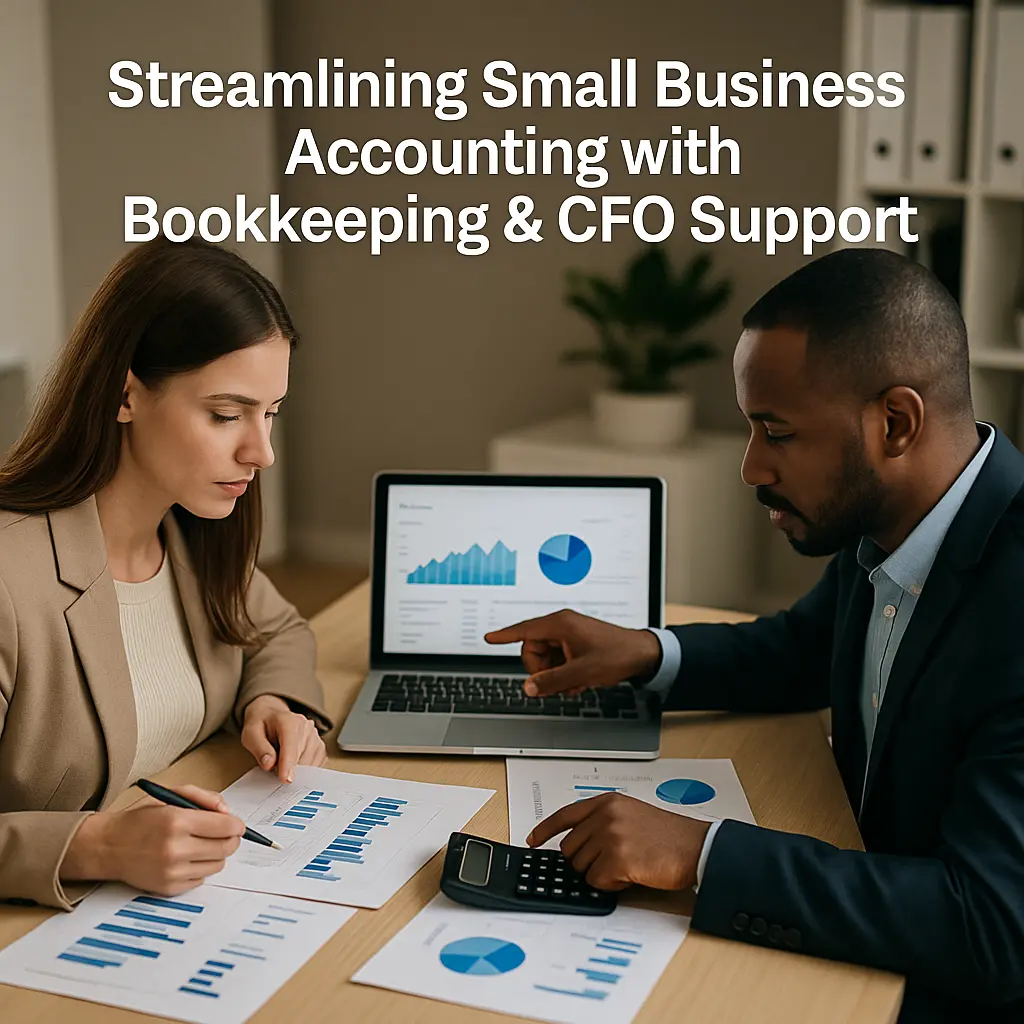
Growing companies thrive when they have access to clean, accurate, and timely accounting information. Reconciled records and forecasts can support decisions, subject to complete information, review and the agreed reporting schedule. Our dedicated team provides expert support to contractors, retailers, professional service providers, and landlords throughout the Tampa Bay area. Confirm support for your specific accounting product and the reporting or advisory services available under your engagement.
Table of Contents
Monthly Accounting Reconciliation
Reconcile bank and credit-card accounts as part of the monthly accounting close. Compare statements with the ledger, investigate unresolved transactions and document adjustments. Closing the books is an accounting process; it does not mean that banks or card services stop operating each month.
Agreed Close Schedule
Strive to complete the month-end close process by the established targeted deadline, making certain that all financial data is thoroughly and accurately reconciled and finalized within the specified designated timeframe. It is essential to prioritize tasks effectively to ensure the month-end close is completed efficiently, while consistently maintaining the highest level of integrity and accuracy in financial reporting. This approach helps support reliable and timely financial statements.
Supporting Documentation
Receipts and supporting workpapers are properly organized and securely maintained on file for reference and verification purposes.
What to Systematize in Small Business Accounting
- Reconciliations: Banks, credit cards, loans each month
- A/R & A/P: Invoices, statements, vendor bills, 1099s
- Payroll sync: Wages, taxes, JE tie-outs
- Job/Product costing: Labor & materials by job/SKU
- Close & review: P&L, Balance Sheet, Cash Flow
- KPIs: Gross margin, AR/AP days, burn rate
- Documentation: Bank rules, memos, receipt capture
- Tax-ready files: Workpapers for your EA/CPA
Accounting Reporting Goals to Discuss
- Cash reporting: Agree on report frequency, reconciliation and forecast assumptions.
- Bank rules can speed categorization, but require testing and review. They do not guarantee that duplicates or miscoding will be prevented.
- Margin review: Assess supported cost records and available reports; live data is not assumed.
- Tax documentation: Appropriate categories and supporting records help evaluate eligible expenses; categorization alone does not create a tax deduction.
- Financing records: Confirm the lender’s reporting and assurance requirements; bookkeeping does not guarantee approval.
- Compliance: 1099s, payroll tie-outs, sales tax
- Owner time back: Delegate with controls
- Confidence: Audit-ready documentation
4 Stages in a Small Business Accounting Workflow
- Kickoff: Connect feeds, tune chart of accounts, vendor rules
- Month-end: Reconcile, review and adjust. Set an appropriate closing date and access controls after review, and check any permitted changes to closed periods. A closing date does not make every QuickBooks record uneditable.
- Reporting: P&L by class/job, Balance Sheet, Cash Flow + KPIs
- Check-ins: Confirm whether estimates, payroll review or tax planning are included and agree on their frequency.
Need deeper insights? Explore our Controller/CFO services.
Tools and Compatibility to Confirm
Confirm the exact product, subscription, bank connection and payroll or project integrations before setup. Feature availability and data timing vary; imported transactions require review and reconciliation before relying on reports.
Related services: Bookkeeping • Tax Preparation • IRS Representation
Ready to Run on Clean, Insightful Numbers?
Use an initial consultation to discuss goals, records and current systems. A detailed technology assessment, setup and delivery schedule require an agreed scope; a consultation does not guarantee a comprehensive plan or immediate implementation.
The IRS business recordkeeping guide describes the role of supporting documents. Agree on who supplies records, investigates discrepancies and approves accounting corrections before relying on a recurring reporting schedule.